Project ECO Environmental Protection: Secondary School
Project E.C.O. 2025 – Environmental Protection - Secondary
CHIJ St. Joseph’s Convent - Gold
The project team executed sustainability initiatives over several months. The Swap & Style clothes exchange, conducted in partnership with Cloop, engaged 200 participants in exchanging quality second-hand clothing items. Through assembly presentations, classroom sessions led by Eco-Stewards and interactive Kahoot quizzes, the team educated students on textile waste and fast fashion impacts. The initiative also included consultation sessions on event management, quality control procedures for donated items, and a post-event textile recycling bin to sustain momentum.
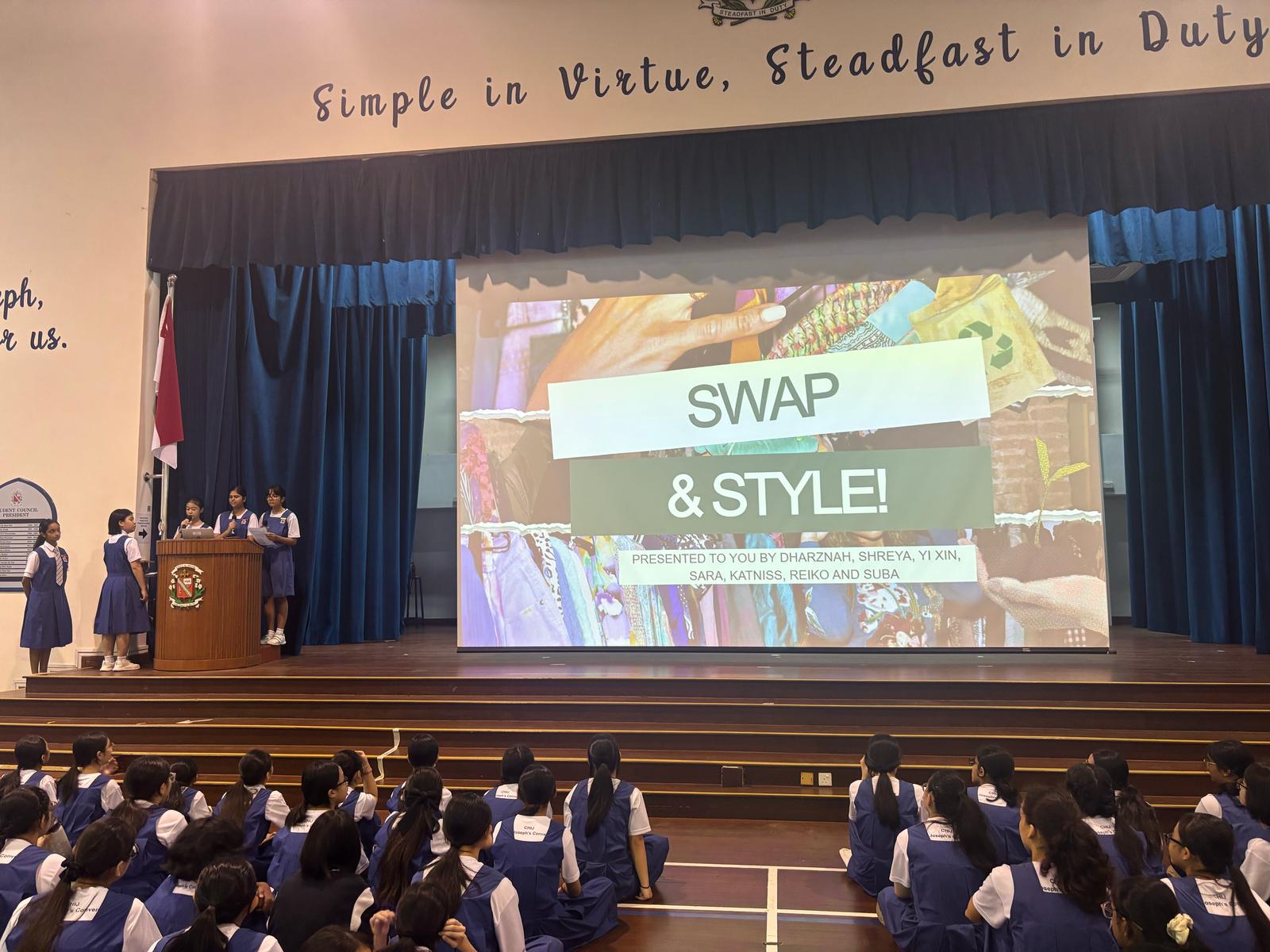
Eco-Stewards sharing about the clothes exchange activity during morning assembly to encourage participation
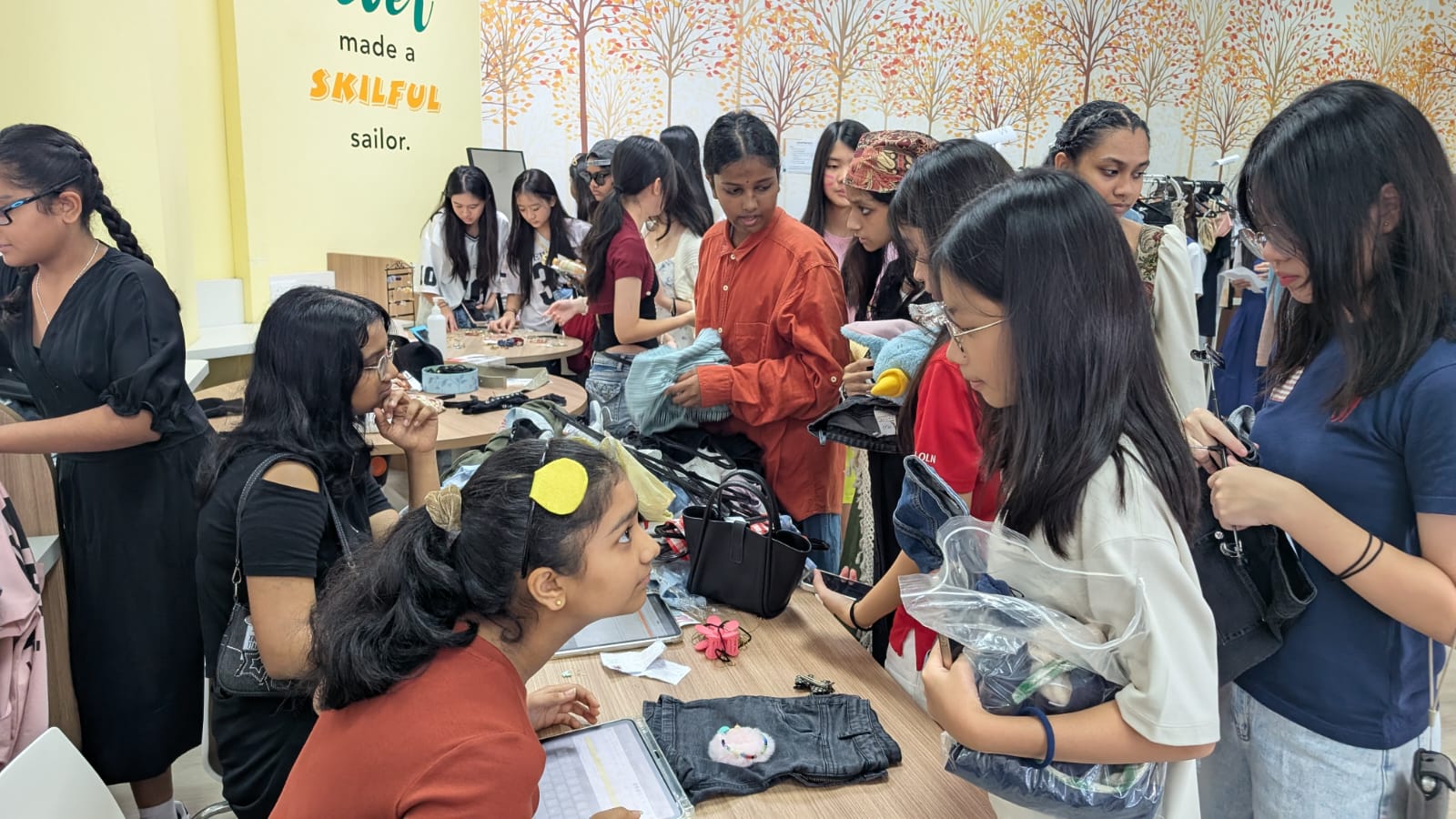
Staff and students participating in the student-run clothes exchange activity
The Climate Change Expo adopted a classroom-based approach, utilising Google Sites to deliver interactive activities on energy conservation and recycling right. The digital platform eliminated paper waste whilst engaging students through games like Power Choices and Recycling Right.
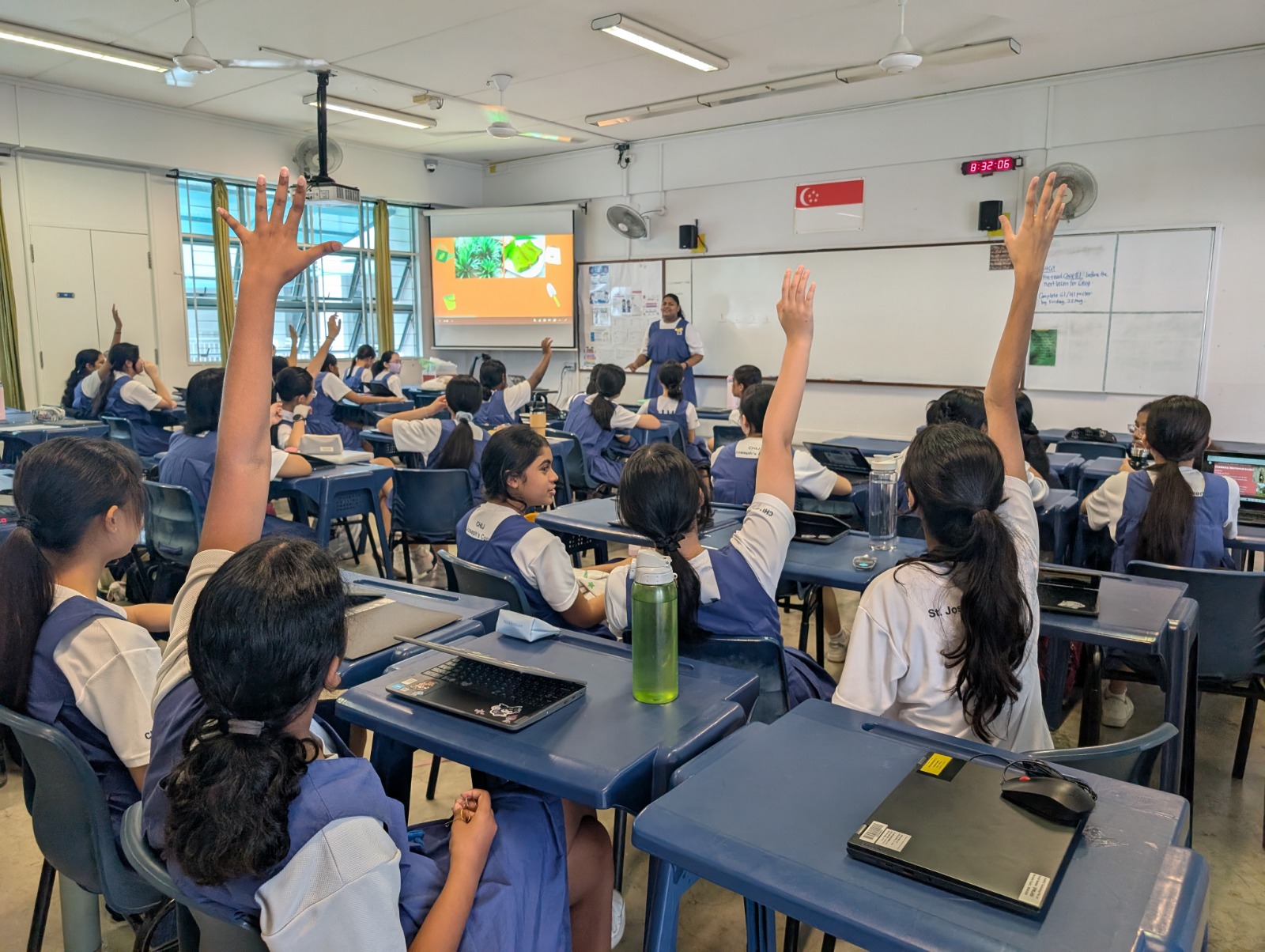
Eco-Stewards leading activities for lower secondary students at the Climate Change Expo to raise awareness of carbon footprints and encourage sustainable choices
Activities included scenario-based discussions on reducing electrical consumption and understanding the carbon cycle, reinforcing practical sustainability actions within the school community.
1. Nanyang Junior College - Silver
Environmental leaders launched Project Rebloom to tackle Singapore's plastic waste challenge through partnership with MINDS Regional Hub (Hougang). Research revealed that whilst many students recycle regularly, inconvenience remains a significant barrier to consistent environmental action.
The project centred on "Turning Plastic Waste into Flowers" workshops, where participants upcycled bottles, straws, and wrappers into decorative art. Sessions reached participants across school and community settings, successfully transforming discarded plastics into meaningful creations.
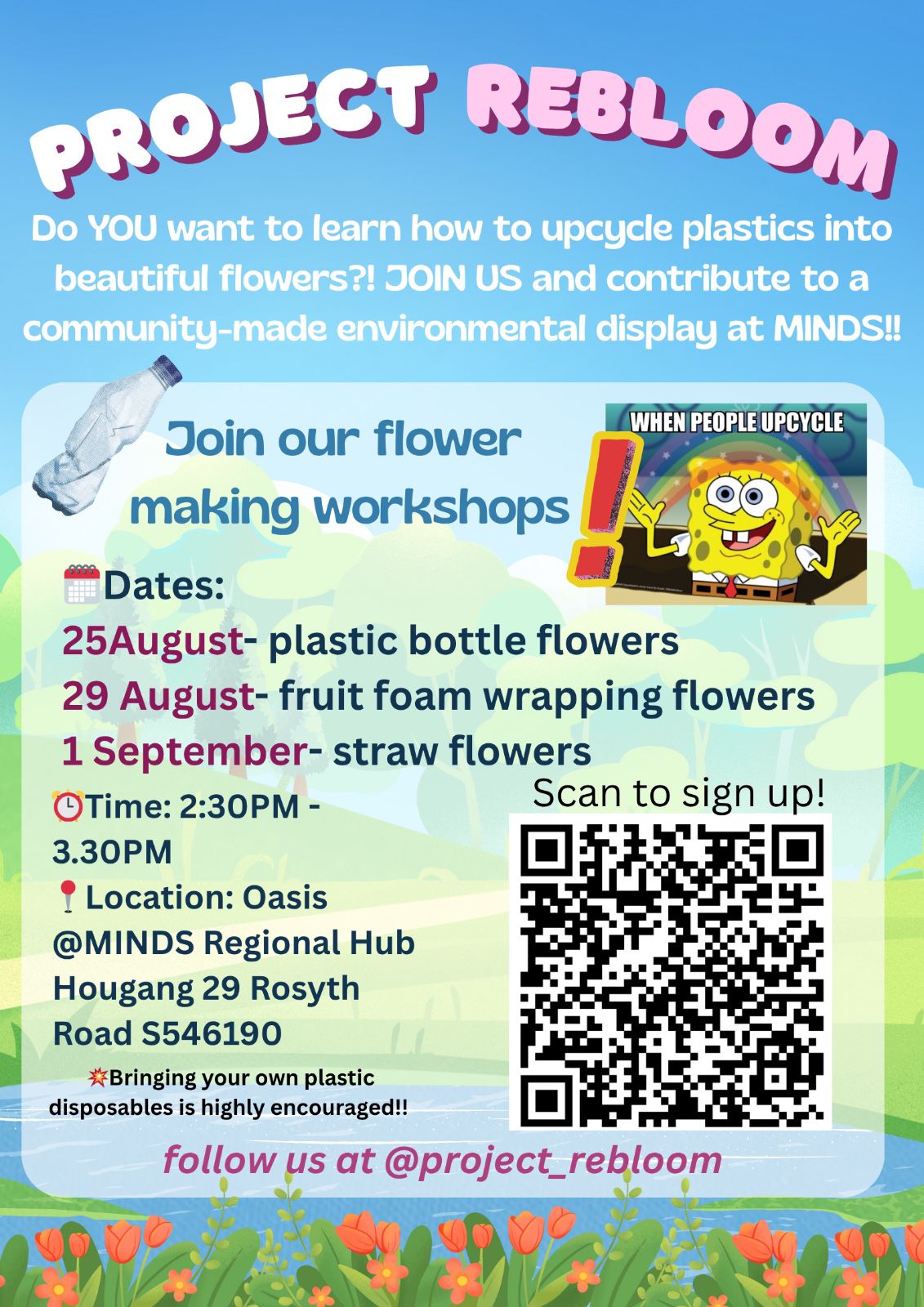
Promotional poster on upcycling workshops
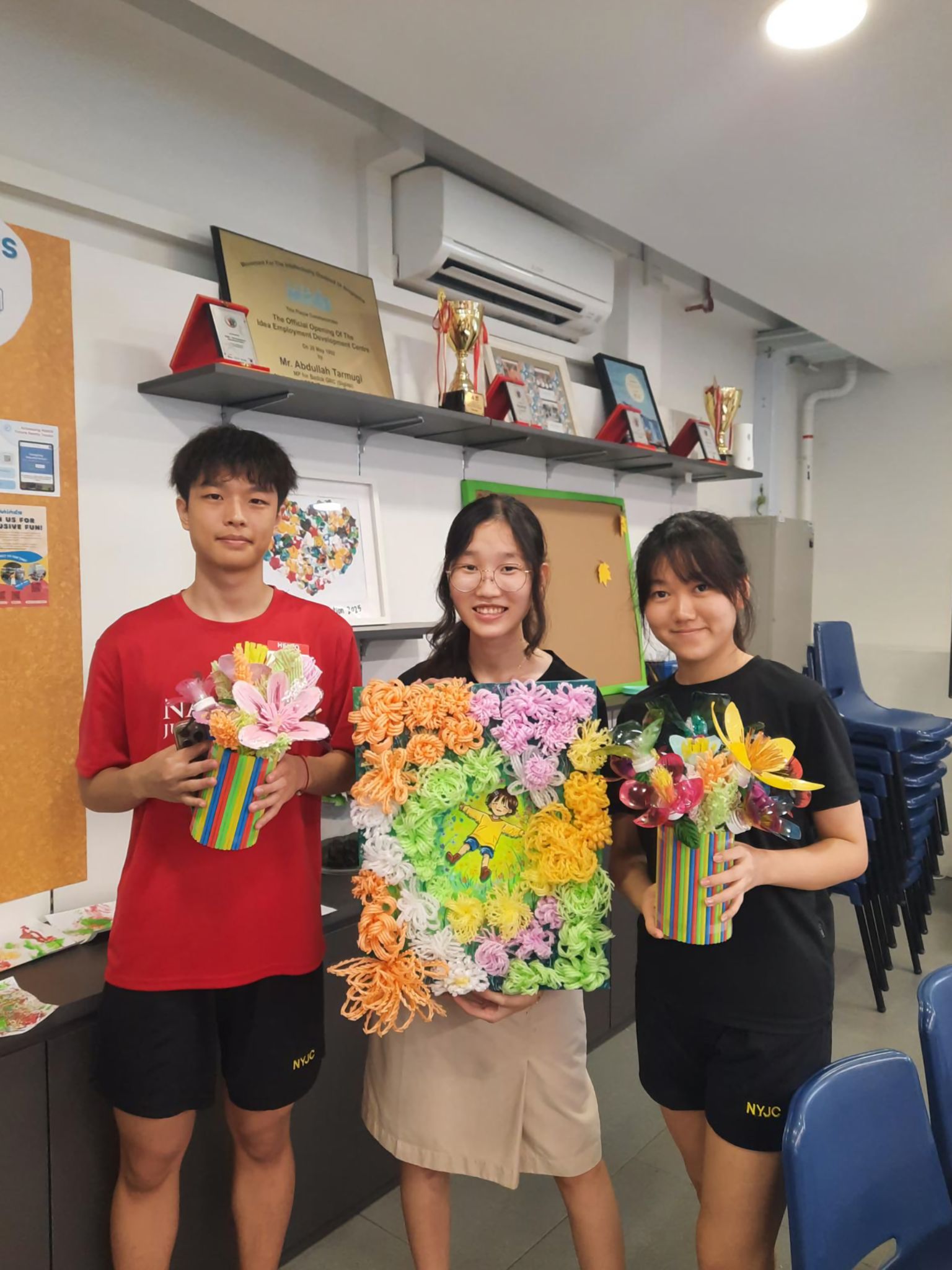
Team members with colourful plastic flowers
The team complemented these workshops with an educational campaign via Instagram, sharing posters, infographics, and practical eco-tips to broaden their reach. A mini exhibition at MINDS showcased collaborative artworks, including pieces crafted from fruit foam wrappers and donated flowers.
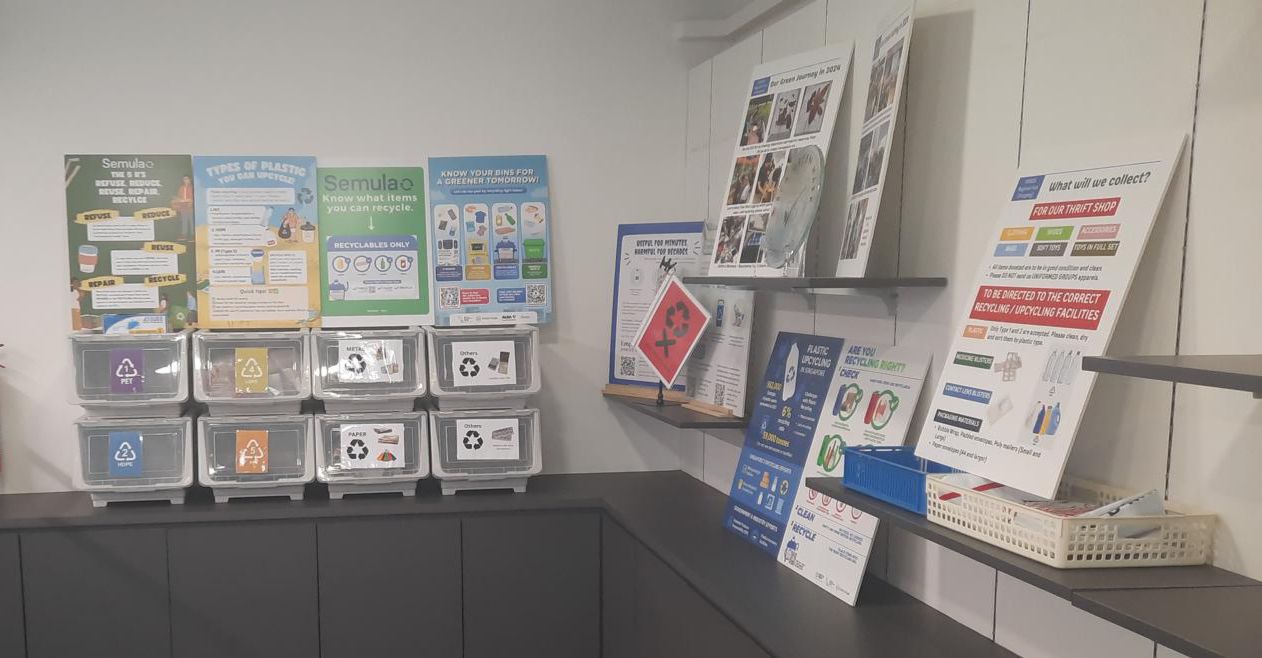
Display of educational posters and infographics
The hands-on approach transformed perceptions—participants began viewing plastic as a resource rather than mere rubbish. By making sustainability practical, rewarding, and inclusive, Project Rebloom demonstrates how creative engagement can foster lasting behavioural change amongst both students and the wider community.
-
Saint Andrew’s Secondary School - Silver
The project team executed a comprehensive seven-month sustainability initiative promoting the 3Rs (Reduce, Reuse, Recycle) within their school community. Following research on waste management and recycling practices, students established multiple programmes including a Starbucks partnership for coffee ground composting, plastic bottle collection drives, and a recycling corner.
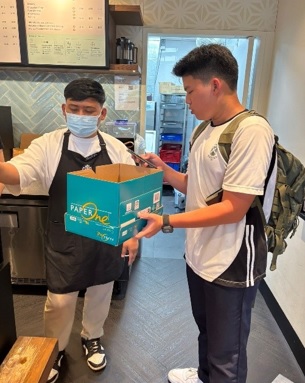
Students partnered with Starbucks to collect used coffee grounds weekly for composting and plastic recyclables.
The team organised engaging activities such as an Amazing Race teaching Secondary 3 students about water conservation and recycling, Saints' Care Day featuring carnival style games, upcycling workshops with elderly beneficiaries, and hands-on sessions creating terrariums, self-watering plant systems, and fruit enzyme fertilisers from food waste.
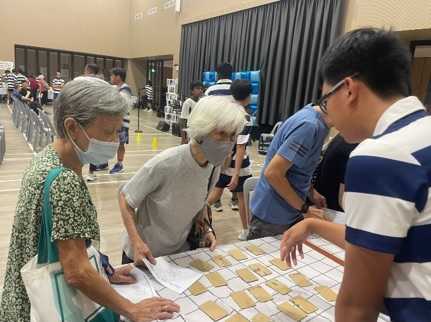
Students curated interactive booths that focused on promoting mental wellness and sustainability, engaged senior citizens from various Active Ageing Centres during 'Saints Care Day'.
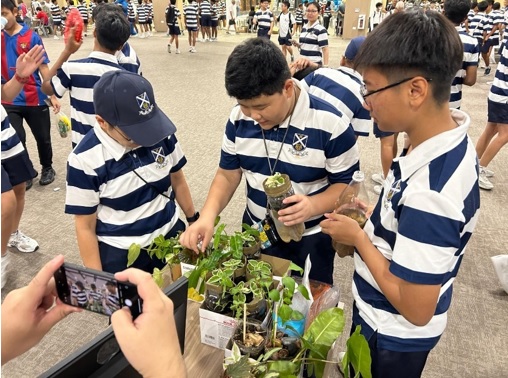
Participants get hands-on learning how plastic bottles can be creatively upcycled into plant pots for home gardening
The initiative successfully integrated environmental education across year levels whilst fostering intergenerational bonding and mental wellness. Through partnerships with Starbucks, Calvary Community Care (C3), and Viriya Family Service Centre, the project extended its impact beyond school boundaries, demonstrating practical applications of sustainable practices and responsible waste management throughout the Potong Pasir/Woodleigh community.
Jurong West Secondary School - Bronze
The project team executed sustainability initiatives over an academic year using Design Thinking methodology. Following Project E.C.O. workshop training and stakeholder consultations, students identified waste management and energy conservation as key challenges. The first initiative featured hands-on upcycling workshops where participants created terrariums from discarded water bottles, wallets from old banners and tetra-paks, and fashion pieces from unwanted fabric. Students also developed promotional materials and organised clothes donation drives. Terrarium workshops were conducted at NTUC Eldercare for elderly residents during National Day celebrations.
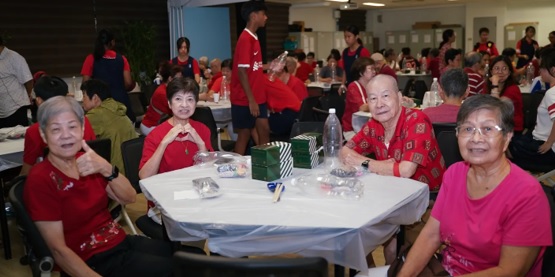
Terrarium Workshops at NTUC Eldercare
The second initiative centred on creating engaging educational content, including videos to promote energy conservation. Students designed advocacy posters, established sustainability corners in every Secondary 1 classroom, and developed gaming challenges for interactive learning. These student-created materials and activities successfully engaged parents, teachers, elderly residents and students in understanding waste reduction and energy conservation practices.
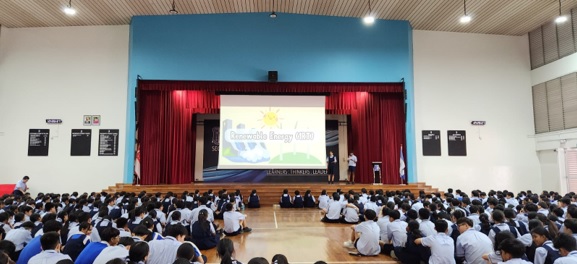
Assembly sharing on Energy Conservation
Dora video on how to reduce waste in school:
https://youtu.be/6bJSEqgdYLs?si=Z3fcp7SNPc9XwZjF